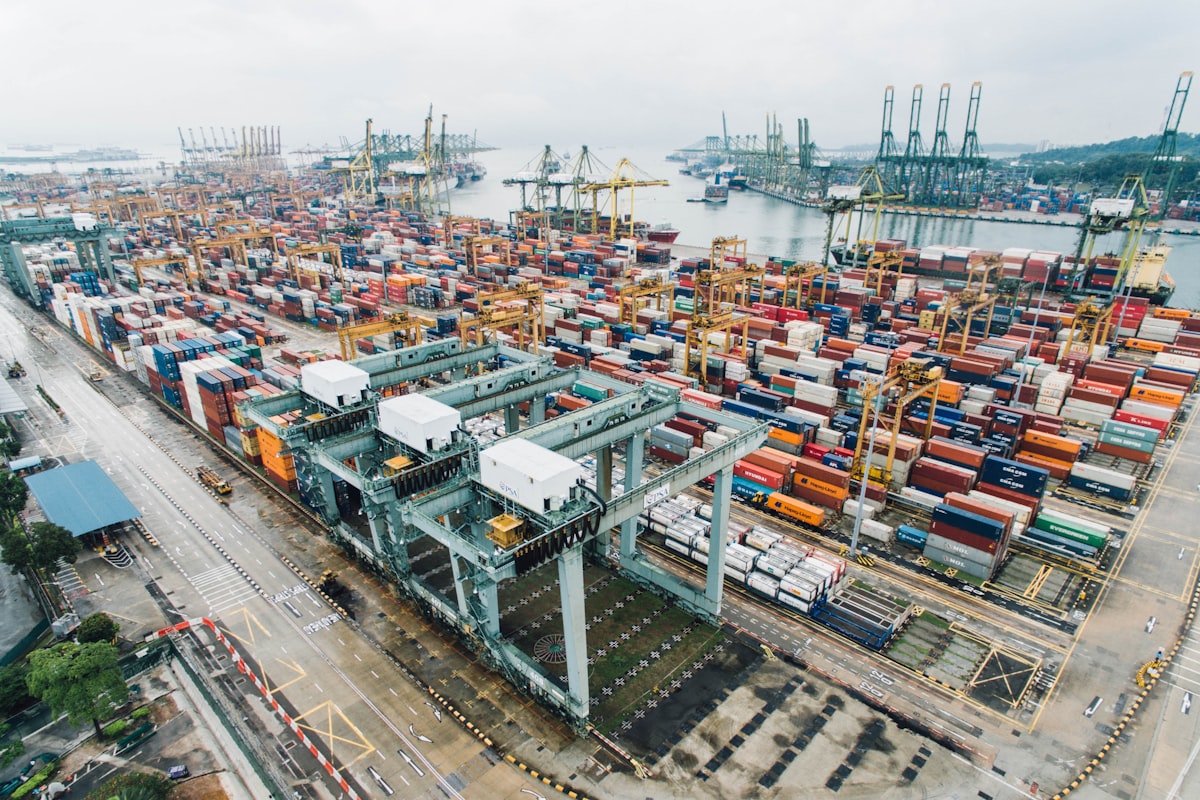
China remains the world's largest exporter — and for B2B importers, accessing its manufacturing ecosystem efficiently is the single biggest competitive advantage available. Yet for every business that sources successfully from China, there are three more that lose money, time, or both to unreliable suppliers, quality failures, or logistical chaos.
This guide covers what works, what doesn't, and how to build a sourcing process that scales.
Why China Sourcing Still Dominates
Despite supply chain diversification trends, China accounts for approximately 14% of global exports — a figure that reflects not just cheap labor but a manufacturing infrastructure that is decades ahead of most alternatives. For product categories ranging from consumer electronics and textiles to industrial components and packaging materials, China offers:
- Deep supplier specialization by product category and region
- Established quality control ecosystems
- World-class freight infrastructure through ports like Ningbo and Shanghai
- A dense network of trading companies and wholesale markets (notably Yiwu International Trade City)
The question for importers is not whether to source from China, but how to do it effectively.
Step 1: Define Your Product Requirements Precisely
Vague product briefs produce vague supplier responses — and eventually, wrong products. Before any supplier search, create a detailed specification document that includes:
- Dimensions and materials — exact measurements, tolerances, material grades
- Compliance requirements — CE, FCC, RoHS, FDA, or other certifications required in your market
- Target price and MOQ — be realistic; if your target FOB is too low, qualified suppliers won't engage seriously
- Packaging requirements — individual unit packaging, carton specifications, labeling
- Delivery timeline — when do you need goods ex-factory?
The more precise your specification, the fewer rounds of back-and-forth you'll need, and the more accurate the quotes you receive.
Step 2: Identify the Right Sourcing Region
China's manufacturing is highly regionalized. Matching your product category to the right geographic cluster dramatically improves supplier quality:
| Category | Key Regions | |----------|-------------| | Consumer electronics | Shenzhen, Dongguan | | Textiles & apparel | Guangzhou, Hangzhou, Keqiao | | Small commodities | Yiwu,义乌 | | Furniture | Foshan | | Plastics & packaging | Ningbo, Dongguan | | Automotive parts | Chongqing, Shanghai |
If your product falls under "small commodities" — a broad category covering everything from home goods to gifts to tools — Yiwu is typically the correct starting point.
Step 3: Qualify Suppliers Rigorously
Finding a supplier on Alibaba or Made-in-China is easy. Finding one that will consistently deliver what they promised is harder. The qualification process must include:
Business License Verification
Request and verify the supplier's business license (营业执照). A legitimate manufacturer will have one that matches their listed business scope.
Factory Audit
An on-site audit is the only reliable way to assess production capacity, quality management systems, and working conditions. It should cover:
- Machine capabilities and age
- Production line capacity versus claimed capacity
- Quality control processes (incoming materials, in-process, outgoing)
- Sample availability
Sample Evaluation
Never place a production order without evaluating samples. Request production samples (not trade show samples) and test them against your specification document.
Reference Checks
Ask for existing customer references in your target market. A supplier with verifiable clients shipping to the EU or USA is significantly lower risk.
Step 4: Negotiate Terms Properly
Price is only one dimension of negotiation. These terms matter equally:
- Payment terms — Standard is 30% deposit + 70% before shipment. Stronger buyers can negotiate better terms once relationships are established.
- Lead time — Get a written production schedule with milestone dates.
- Inspection rights — Confirm your right to inspect goods before departure.
- Defect policy — Agree upfront on how defects are handled (replacement, credit, rework).
Everything agreed verbally should be confirmed in writing, in English and Chinese.
Step 5: Pre-Shipment Inspection
This is non-negotiable. Before your goods leave the factory, a qualified inspector must physically verify:
- Quantity — actual carton count vs. ordered quantity
- Appearance — color, finish, labeling accuracy
- Functionality — product works as specified
- Packaging integrity — cartons properly packed for freight
Third-party inspection companies (SGS, Bureau Veritas, TÜV) provide this service, as do on-ground trade operations partners like Arivon Trade.
Step 6: Manage Freight and Customs
Once goods pass inspection, the logistics phase begins. Key decisions include:
- Freight mode — sea freight (FCL or LCL), air freight, or rail (for European destinations)
- Incoterms — FOB, CIF, DDP; understand what each means for your liability
- Customs documentation — commercial invoice, packing list, bill of lading, certificates of origin
- Duties and taxes — research import duties in your destination country before pricing your product
Common Mistakes to Avoid
Choosing based on price alone. The cheapest quote rarely reflects the actual landed cost. Hidden costs emerge in quality failures, rework, and missed deadlines.
Skipping the factory audit. Supplier profiles and certifications can be fabricated. A physical audit cannot.
Neglecting pre-shipment inspection. Once goods are on the vessel, your leverage disappears entirely.
Working without a written agreement. A signed contract in both languages is your primary protection if a dispute arises.
Conclusion
Sourcing from China is not inherently risky — but it is unforgiving of shortcuts. Businesses that invest in proper supplier qualification, contractual clarity, and physical inspection consistently outperform those that don't.
If building this capability in-house is not feasible, the alternative is partnering with an on-ground trade operations company that already has the supplier relationships, inspection capability, and logistics network in place.
Arivon Trade operates directly in Yiwu, China with staff on the ground for factory audits, supplier communication, and pre-shipment inspection. Contact us to discuss your sourcing requirements.