"Door-to-door" logistics is one of the most overused and least-defined terms in international freight. For some providers, it means delivery to the destination port. For others, it includes customs clearance. For a true door-to-door service, it means exactly what it says: goods move from the factory gate in China to your warehouse, with all intermediate steps managed.
Understanding what is and isn't included in a door-to-door quote is the difference between a smooth import experience and an unexpected bill at the destination port.
What Door-to-Door (DDP) Actually Covers
A genuine door-to-door service under Delivered Duty Paid (DDP) Incoterms covers:
- Origin pickup — truck from factory to freight consolidation point or port
- Export clearance — Chinese customs documentation and export declaration
- International freight — sea, air, or rail from China to destination country
- Destination port handling — port fees, terminal handling charges
- Import customs clearance — classification, duty and tax payment
- Last-mile delivery — from customs release point to your specified address
When all six stages are included and coordinated by a single party, you have a true DDP service. When any of these stages is excluded (especially import duties or last-mile), the service is not door-to-door regardless of how it's marketed.
Freight Modes: Sea, Air, Rail
The right freight mode depends on your product's weight, urgency, and margin.
Sea Freight
The default for most import volumes.
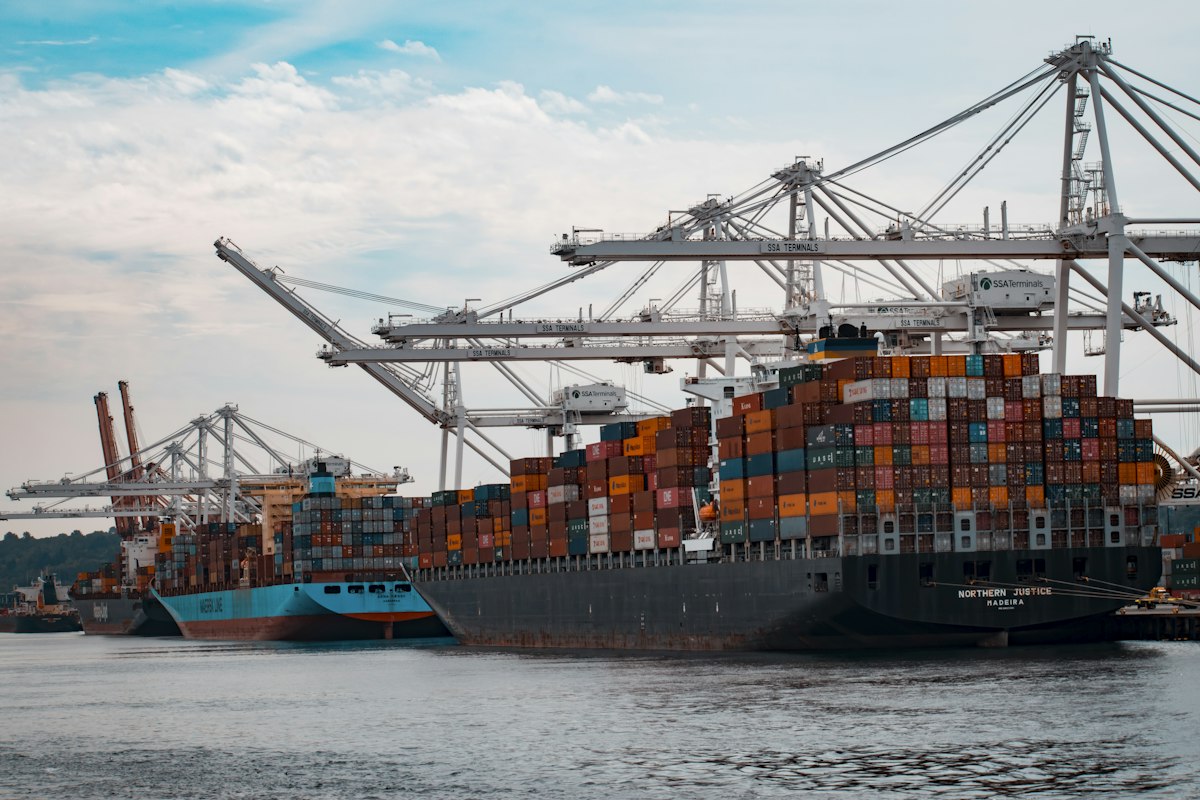
FCL (Full Container Load): You book an entire container — 20-foot (approximately 25 CBM) or 40-foot (approximately 65 CBM). More cost-effective per cubic meter for large volumes. Transit time from China to Europe: 25–35 days. China to USA: 20–30 days.
LCL (Less than Container Load): Your goods share a container with other importers' shipments. Higher cost per cubic meter, but lower absolute cost for smaller volumes. Adds 3–7 days for consolidation and deconsolidation at each end.
When to use sea freight: Orders above approximately 2 CBM where speed is not critical.
Air Freight
Significantly faster (3–7 days gate-to-gate), significantly more expensive (8–12x sea freight cost per kg). Suitable for:
- High-value, low-weight products (electronics, jewelry)
- Time-sensitive shipments (restocks, seasonal items)
- Small trial orders where speed justifies cost
Rail Freight
An increasingly competitive option for China-to-Europe shipments. Transit times of 15–20 days versus 25–35 by sea, at approximately 1.5–2x sea freight cost. Routes via Kazakhstan, Russia, and Eastern Europe. The China-Europe Express Railway (中欧班列) connects Yiwu to major European cities including Madrid, Warsaw, and Hamburg.
Consideration: Geopolitical factors currently affect certain rail routes. Verify current route availability before committing.
Import Duties and Customs
This is where most "surprises" in door-to-door logistics originate. Import duties are country-specific, product-specific, and sometimes origin-specific. Before pricing your product, you must know:
Your HS Code — the Harmonized System commodity code that determines duty rate. Misclassification is common and can result in underpayment (creating a compliance liability) or overpayment.
Applicable duty rate — varies by product and destination country. Check your national customs authority's tariff schedule.
Anti-dumping duties — certain Chinese product categories face additional duties in the EU and USA. These can be substantial (up to 60%+).
VAT/GST at import — most countries apply value-added tax at the point of import. This is separate from customs duties.
A reputable door-to-door provider will research your applicable duty rate before quoting and include it in the DDP price. A disreputable one will quote "DDP exclusive of duties" — which is not DDP.
Common Failure Points
Consolidation Delays at Origin
If your goods need to be consolidated from multiple factories before container loading, the coordination point is a common source of delays. Ensure your provider has a clear consolidation plan with defined timelines.
Port Congestion
Port congestion affects transit times unpredictably, particularly at Ningbo and Shanghai. Build buffer into your delivery commitments, particularly for seasonal products.
Customs Hold at Destination
Goods can be held by customs for examination, particularly if documentation is incomplete or product classification triggers review. A customs broker with experience in your product category significantly reduces this risk.
Last-Mile Complexity
"Delivery to your address" assumes a commercial address with loading dock access. Delivery to a private residence, restricted area, or address requiring appointment scheduling adds cost and complexity that should be agreed upfront.
What to Ask Your Freight Provider
Before committing to a door-to-door logistics service, get clear written answers on:
- Is import duty included, or duty-exclusive?
- What is the transit time guarantee, and what happens if it's missed?
- Are port handling fees and terminal charges included?
- What is the liability limit if goods are damaged in transit?
- What documentation do you provide for import customs clearance?
- Who is your last-mile delivery partner in the destination country?
Vague answers to any of these questions are a red flag.
Building a Reliable Logistics Chain
The most reliable approach for recurring import volumes is to establish a consistent logistics process with a single accountable partner who manages end-to-end — rather than stitching together separate freight, customs, and delivery providers.
This creates:
- Single point of contact for all logistics queries
- Consistent documentation practices that reduce customs complications
- Institutional knowledge of your product categories and typical requirements
- Better freight rates from volume consolidation
Arivon Trade coordinates full door-to-door logistics from China to global destinations, including freight forwarding, customs clearance, and last-mile delivery. Contact us to discuss your logistics requirements.